sales@dhundairytech.com | +91 8200673508

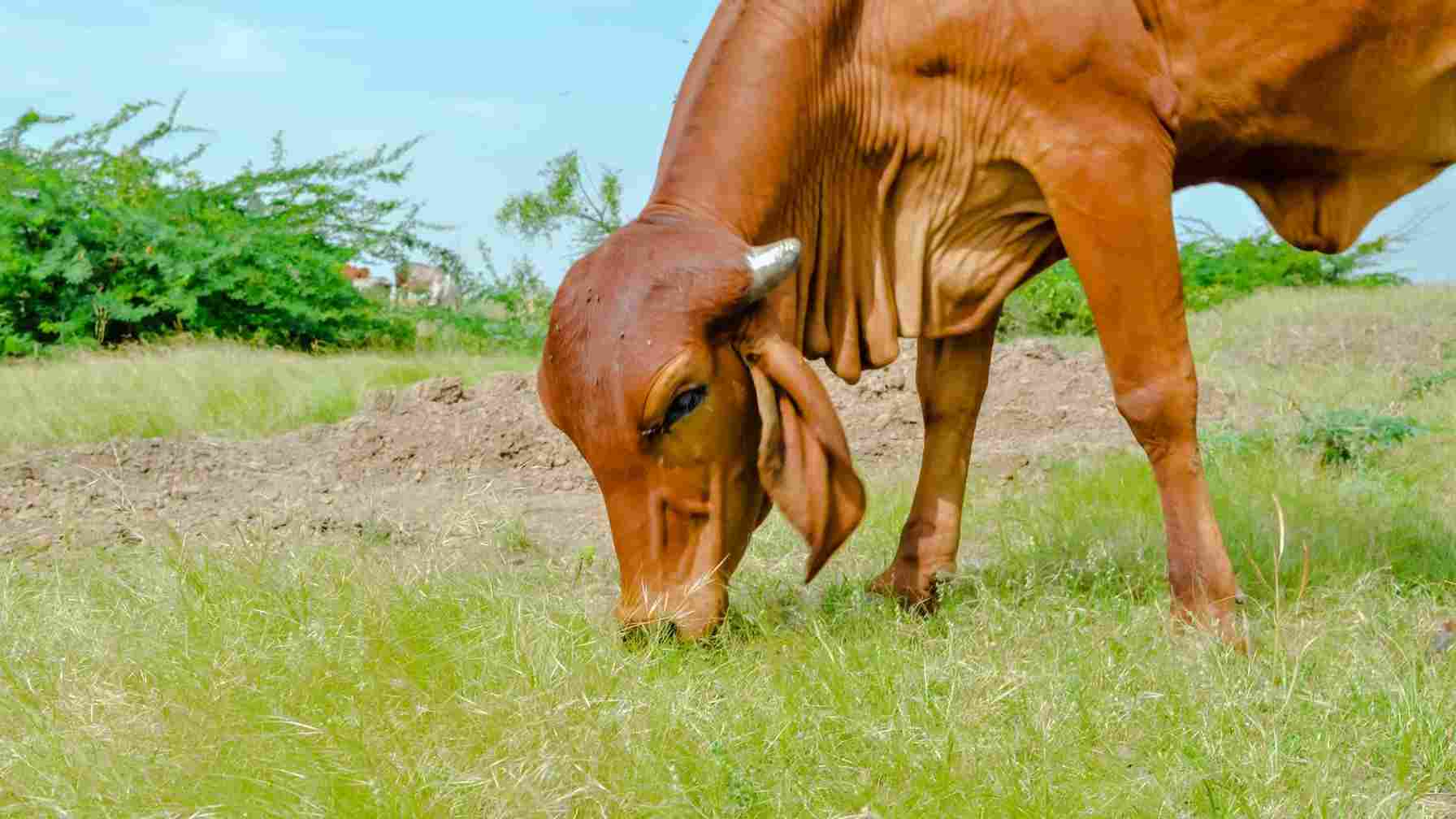
Why Gir Cows Are Known as the “Queen of Milk Production”

In the world of dairy cattle, few indigenous breeds command as much reverence and global economic value as the Gir cow (Bos indicus). Hailing from the arid forests of western India, this majestic humped breed has earned the definitive title: the “Queen of Milk Production.”
As global consumer demand shifts sharply away from conventional hybrid dairy toward pure A2 beta-casein milk, Vedic bilona ghee, and organic pasture-raised farming, the Gir cow has emerged as the gold standard for high yield, environmental resilience, and commercial viability.
1. The Heritage of Gir Cows: From Saurashtra to the World
Originating in the Gir Hills and forests of Kathiawar (Saurashtra region, Gujarat, India), the Gir breed developed exceptional survival traits over centuries of natural selection in semi-arid conditions.
Characterized by their convex broad forehead, long pendulous ears (folded like a leaf), and reddish-brown coats, Gir cows are physically built to endure:
- Extreme Heat Tolerance: Sweat glands and loose skin folds (dewlap) dissipate heat efficiently.
- Tick and Disease Resistance: Natural immunity against tropical pathogens, mastitis, and parasitic infections.
- Global Footprint: Countries like Brazil, Mexico, the United States, and Australia imported Indian Gir genetics decades ago. In Brazil, crossbreeding Gir with Holstein Friesian created the world-renowned Girolando breed, which now supplies the majority of Brazil’s total dairy output.
2. The Science of A2 Milk: Why Quality Trumps Quantity
The cornerstone of the Gir cow’s royal status is its natural synthesis of 100% pure A2 beta-casein protein.
| Feature | Gir Cow (A2 Milk) | Standard Exotic/Hybrid (A1 Milk) |
| Protein Type | Pure A2 Beta-Casein | A1 Beta-Casein |
| Digestibility | Gentle on gut; does not release BCM-7 | Can cause inflammation, bloating, and lactose discomfort |
| Fat Content | 4.5% – 5.5% (High Butterfat) | 3.0% – 3.8% (Lower Butterfat) |
| Color & Nutrients | Golden hue (rich in Beta-Carotene & CLA) | Opaque white; lower fat-soluble vitamins |
| Value-Added Products | Ideal for high-grade A2 Ghee & Paneer | Standard commercial table milk |
Unlike A1 milk, which releases the peptide Beta-Casomorphin-7 (BCM-7) during digestion—often triggering inflammation, digestive discomfort, and metabolic stress—Gir cow A2 milk digests smoothly and supports immune and cognitive health.
3. High Milk Yield and Longevity
While many indigenous zebu breeds are kept primarily for draught or low-volume subsistence, the Gir cow is a high-performing dairy producer:
- Daily Yield: A well-managed Gir cow produces between 10 to 20+ liters per day, depending on lineage and feed management.
- Lactation Length: Consistent milk output across 300+ days per lactation cycle.
- Extended Productive Lifespan: Unlike intensive commercial hybrid cows that burn out after 3–4 lactations, Gir cows often remain fertile and productive for 12 to 15 lactations.
High Butterfat (4.5%–5.5%) + Rich Carotenoids = 1kg Pure Ghee from ~25–30 Liters of Gir Milk
4. Economic Driver for Value-Added Dairy: A2 Bilona Ghee
The financial return on Gir cow dairy farming is driven by high-value downstream products, most notably Vedic A2 Bilona Ghee:
- Vedic Preparation: Milk is cultured into curd, churned bi-directionally with a wooden churner (bilona), and heated over low flame to yield nutrient-dense golden clarified butter.
- Ayurvedic Importance: Revered in traditional holistic medicine for supporting gut lining repair, memory function, joint lubrication, and fat-soluble vitamin absorption (A, D, E, K).
- Market Pricing: A2 Gir cow ghee commands 3x to 5x higher market prices compared to conventional commercial butter oil.
5. Ideal Breed for Sustainable & Organic Agriculture
The Gir cow is central to circular, zero-waste farming systems:
- Low Maintenance Input: Thrives on native roughage, silage, and balanced Total Mixed Rations (TMR) without requiring heavy antibiotic regimes.
- Bio-Fertilizers & Pest Repellents: Gir cow dung and urine (Gomutra) form the active biological foundation of natural farming formulations like Jeevamrut, Ghanjeevamrut, and Bijamrit, restoring soil microbiology and reducing chemical fertilizer dependencies.
- Calm & Docile Temperament: Their gentle disposition reduces animal stress during automated or manual milking, directly translating to higher oxytocin levels and better milk let-down.
6. Modernizing Gir Cow Dairy Farms
To maximize output and maintain herd health, modern Gir cow dairies integrate smart farming technologies:
- Automated Milking Parlours: Ensure hygienic, hands-free milk extraction while preserving teat health.
- Herd Management & AI Health Monitors: Real-time tracking of estrus cycles, rumination, and early signs of subclinical mastitis.
- Efficient Feed & Manure Management: Total Mixed Ration (TMR) wagons for consistent caloric intake and automated slurry separators to convert manure into organic compost.
Frequently Asked Questions (FAQs)
What makes Gir cow milk different from regular dairy milk?
Gir cow milk contains pure A2 beta-casein protein without the inflammatory A1 mutation found in many European hybrid cows (like Holstein-Friesian). It is naturally richer in beta-carotene, vitamins, and digestible butterfat.
Where did Gir cows originate?
The Gir breed is indigenous to the Gir forest and Saurashtra region of Gujarat, India, but is now bred across North America, South America (notably Brazil), and the Middle East.
How much milk does a Gir cow give per day?
On average, a healthy Gir cow produces 10 to 18 liters per day under standard farm management, with prize genetic bloodlines yielding upwards of 20 to 25 liters daily.